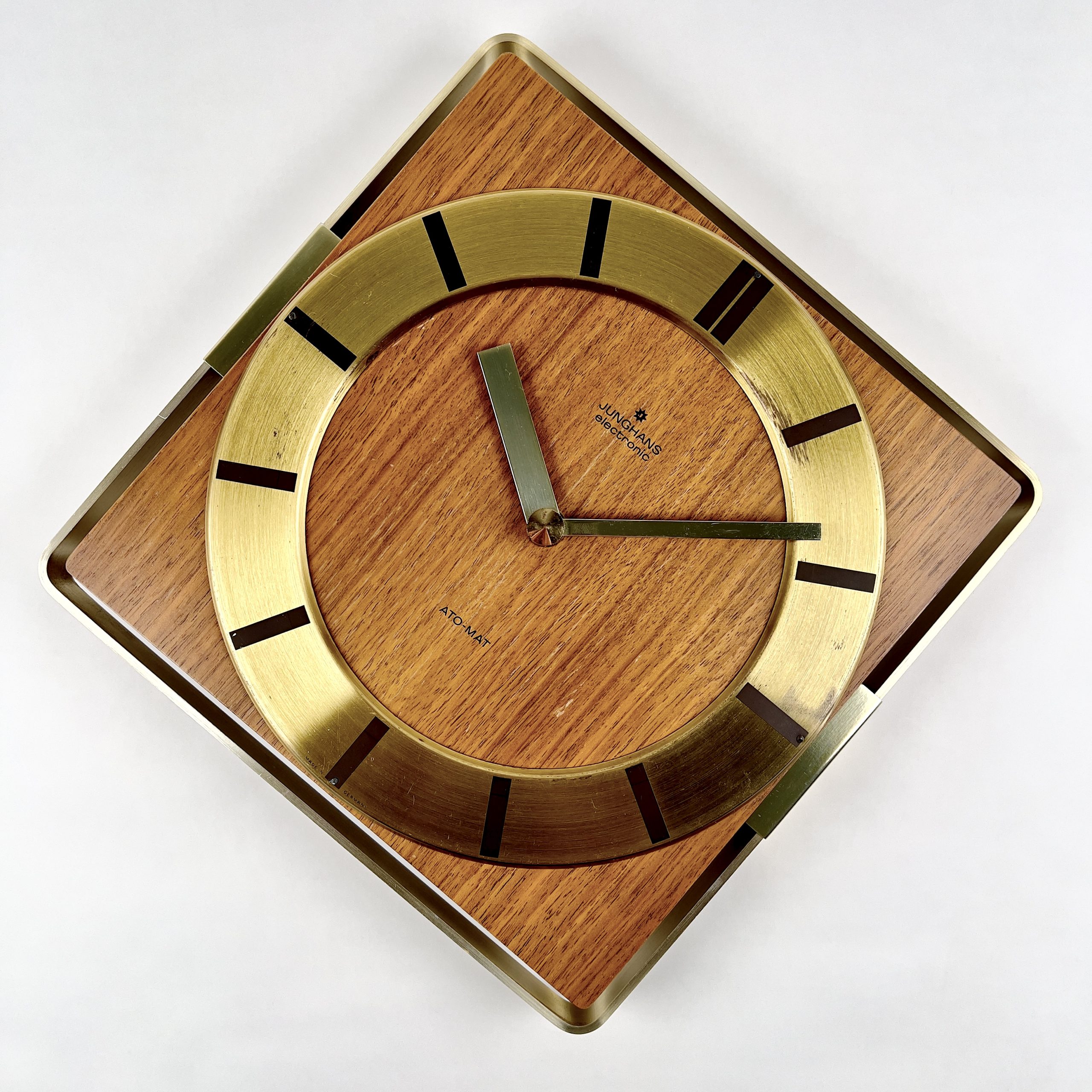
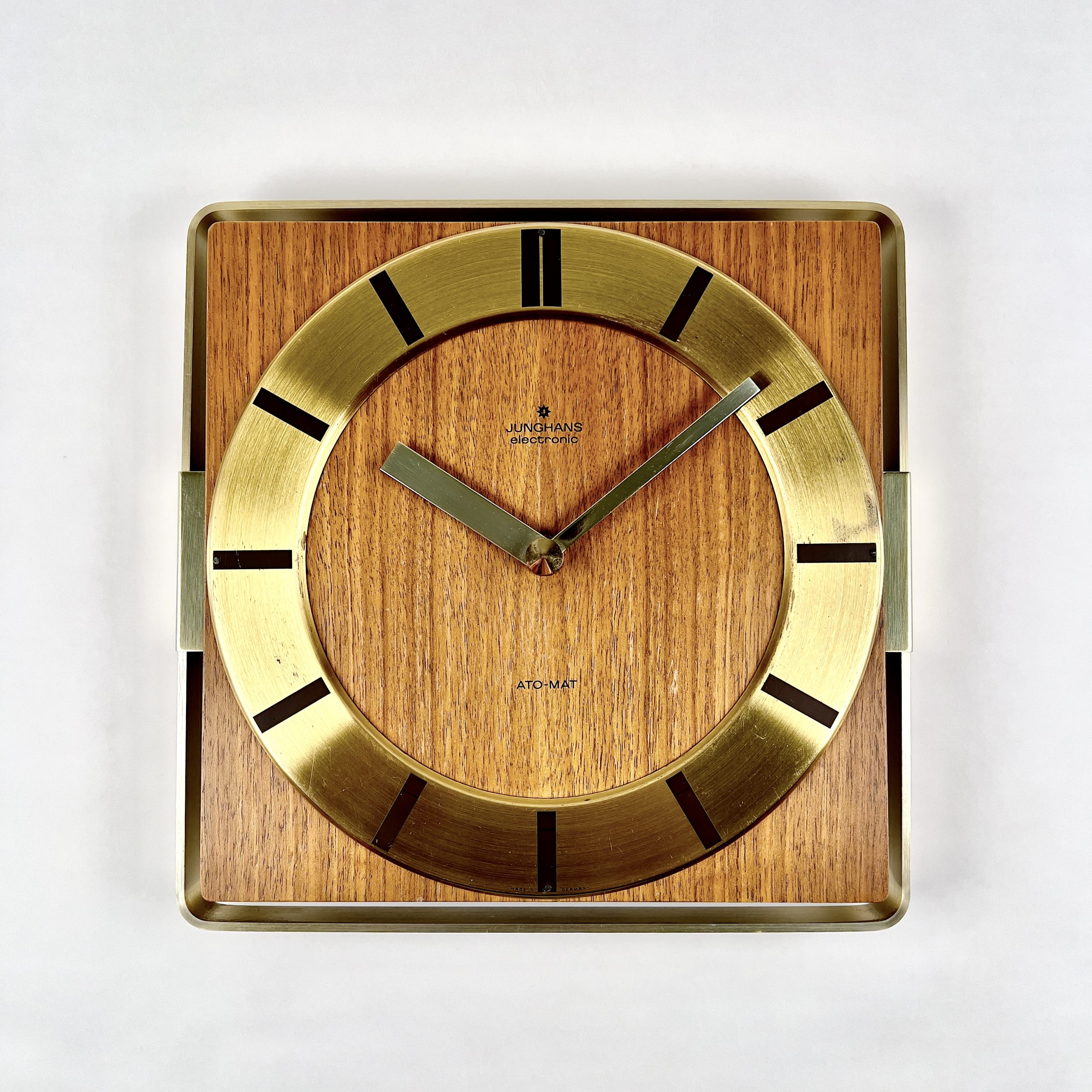
JUNGHANS ATO-MAT BRASS/WALNUT CLOCK, 1974
450,00 €
A very rare example of a Junghans wall clock in the purest 1970s style.
Junghans, founded in 1861 by Erhard Junghans, grew rapidly and was poised to write an important chapter in the history of watchmaking, as well as in industrial and architectural history. By 1903, Junghans was the largest watch manufacturer in the world. In 1961, the company's centenary year, 6,000 employees and 10,000 machines produced 20,000 timepieces of all kinds every day, which were exported to around 100 countries.
Let's go back to the basics: on April 14, 1861, Erhard Junghans and his brother-in-law founded the watch component factory "Zeller & Junghans." The site chosen was a plot of land in the Lauterbach valley, which already housed a communal oil mill, albeit an inefficient one. This was converted without hesitation and soon had the first production machines up and running.
However, the company was still a long way from manufacturing complete watches: it began by producing components for large clocks in the Black Forest, such as wooden cases, bronze shields, hands, glass doors, wire hooks, hinges, and pendulum discs, before manufacturing its first watches in 1866.
Thanks to the development of precise movements for watches, chronometers occupy an essential position in the market. In 1951, Junghans was the largest manufacturer of chronometers in Germany and the third largest in the world in 1956.
In the early 1950s, Junghans wanted to commission an artist to design something as mundane as a kitchen clock. They chose Swiss artist Max Bill, who, in addition to being a painter, sculptor, graphic designer, and architect, was also a renowned product designer.
Born in 1908, the artist studied at the Bauhaus in Dessau and was one of the founders of the Hochschule für Gestaltung in Ulm, the city's higher education institution for design. With the help of his students, Max Bill developed the first designer kitchen clock for Junghans. This marked the beginning of a real success story for the traditional Schramberg-based company.
Since 1961, Max Bill has been designing watches with a minimalist style, while Junghans ensures that these design classics always reflect the latest technical advances.
In 1970, the company caused a sensation by presenting a pre-production series of the first German quartz watch. With its "Astro-Quartz" watch, Junghans once again opened a new chapter in the history of watchmaking. Given the cost of the technology used, the watch sold for the hefty sum of 800 German marks. In 1972, the W666.02 caliber went into series production.
1972 Olympic Games. The whole world has its eyes on Munich – and on Junghans. As the official timekeeper for the Games, Junghans sets new standards in sports timing. Starting blocks, start control systems, and double photoelectric barriers enable both starts and finishes to be recorded, controlled, and documented uniformly.
Thanks to this new technique, the precise timing of performances in high-level sports became an objective and indisputable value. Records could now be measured accurately. Combined with the first color photo finishes taken to the nearest hundredth of a second, this innovative method enabled Junghans to make a name for itself as a timekeeper for sporting competitions.
Let's pause for a moment at the time this play was written:
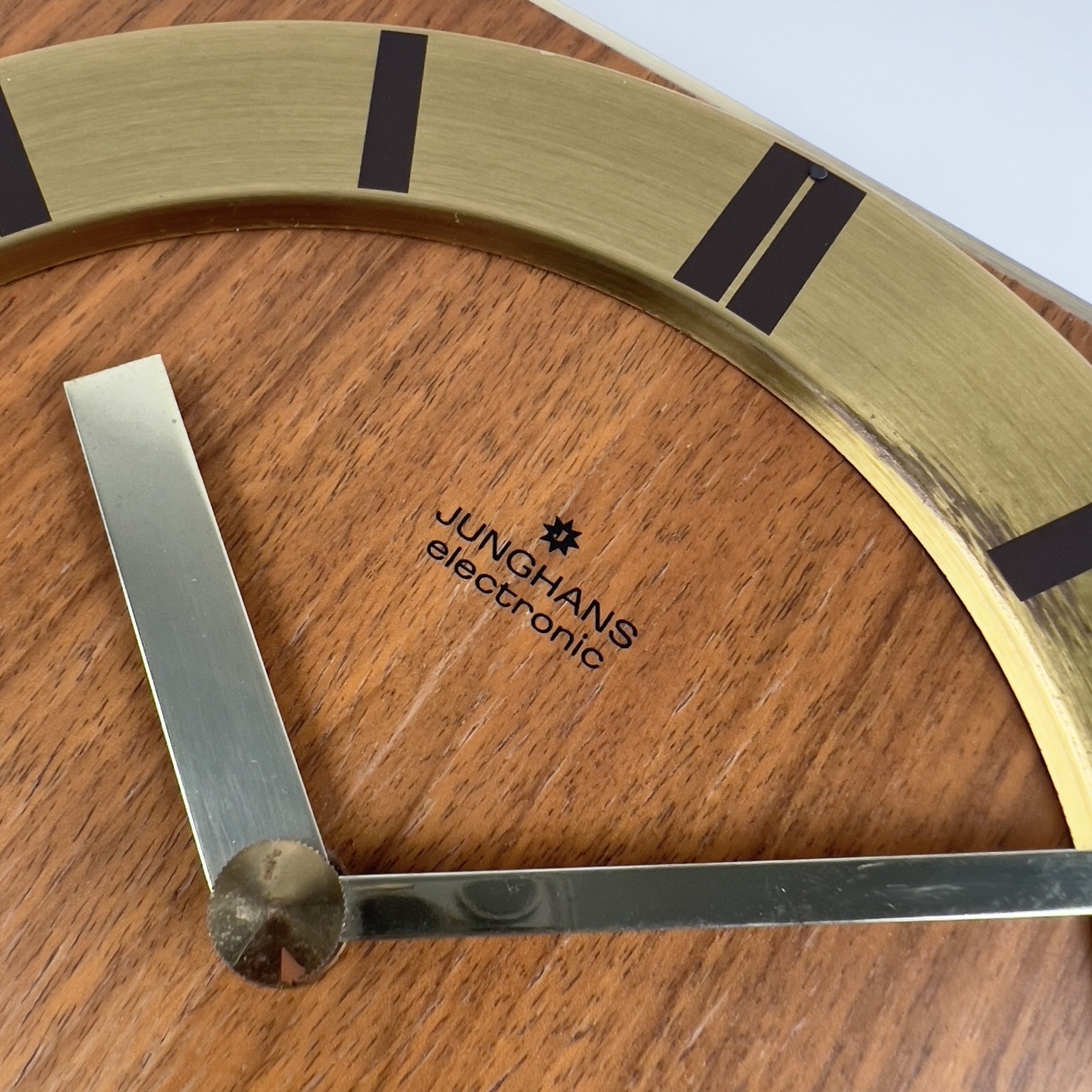
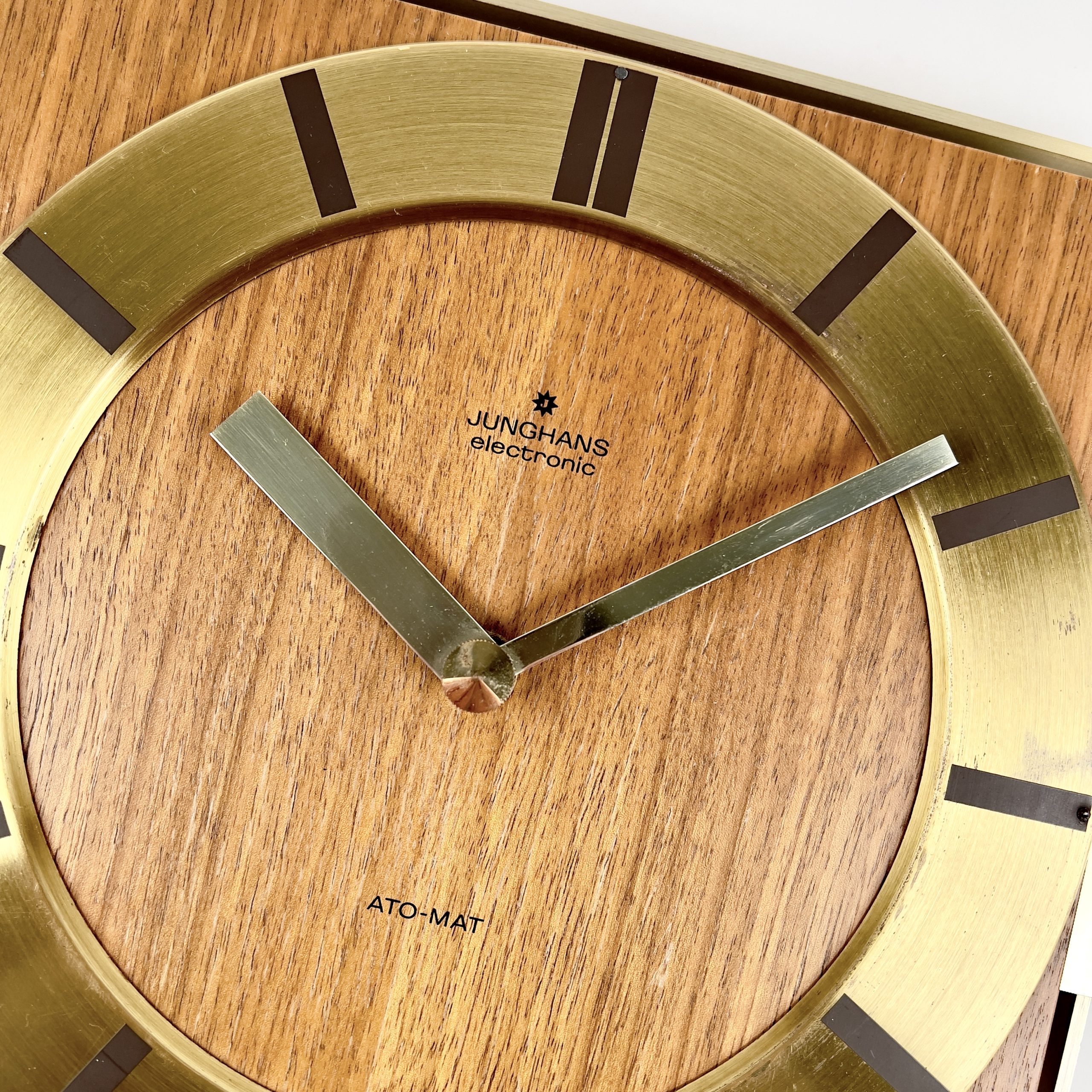
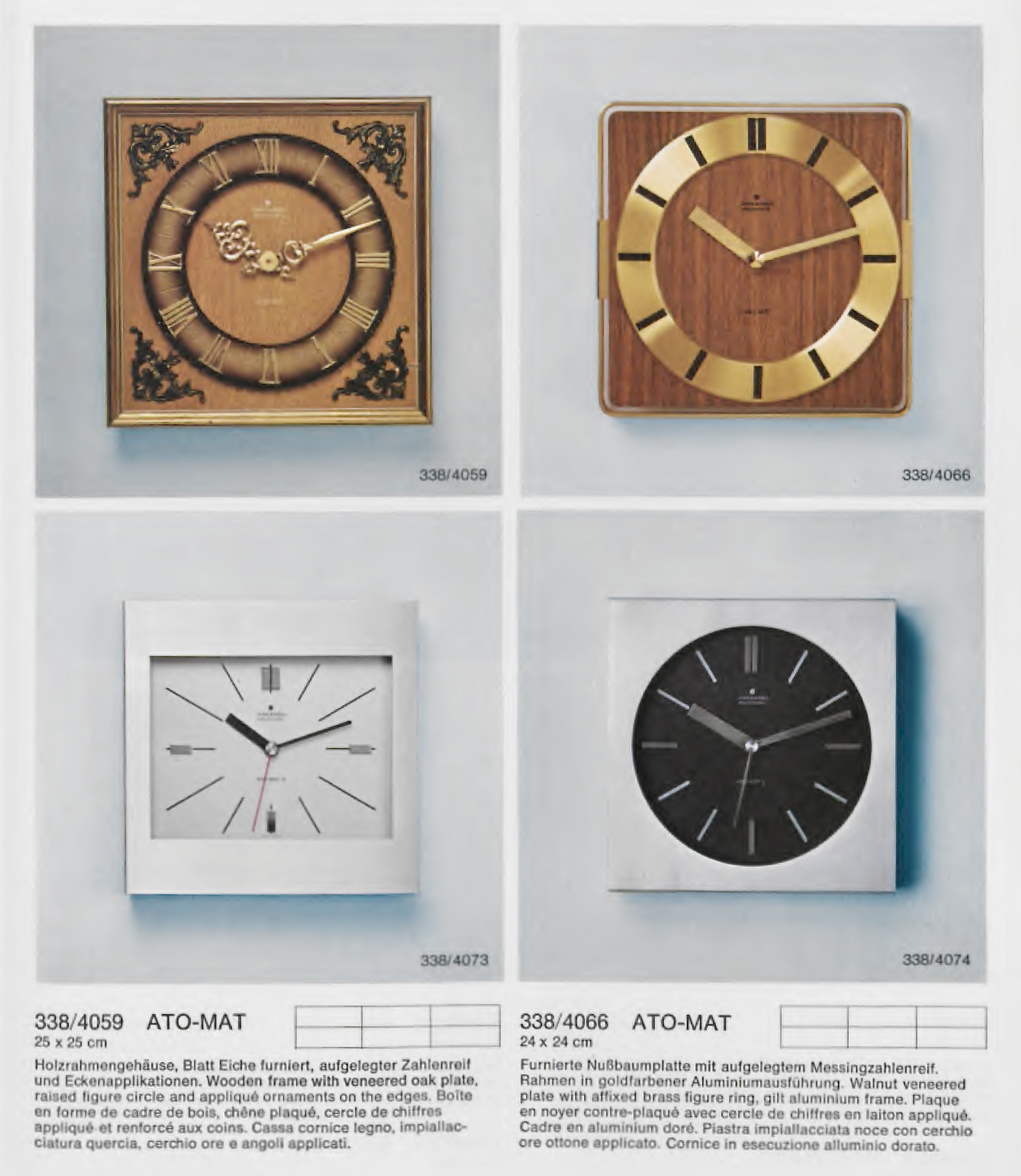
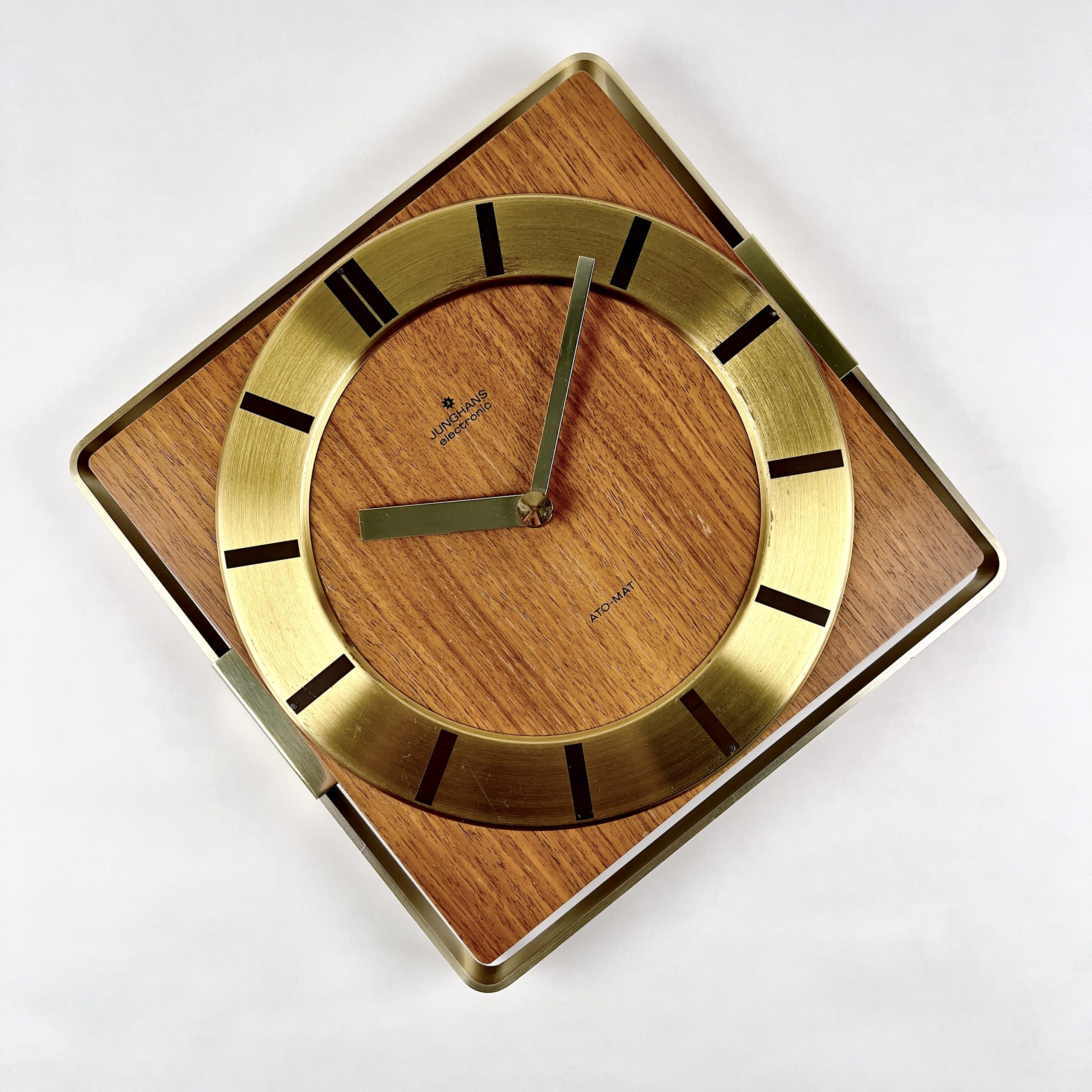
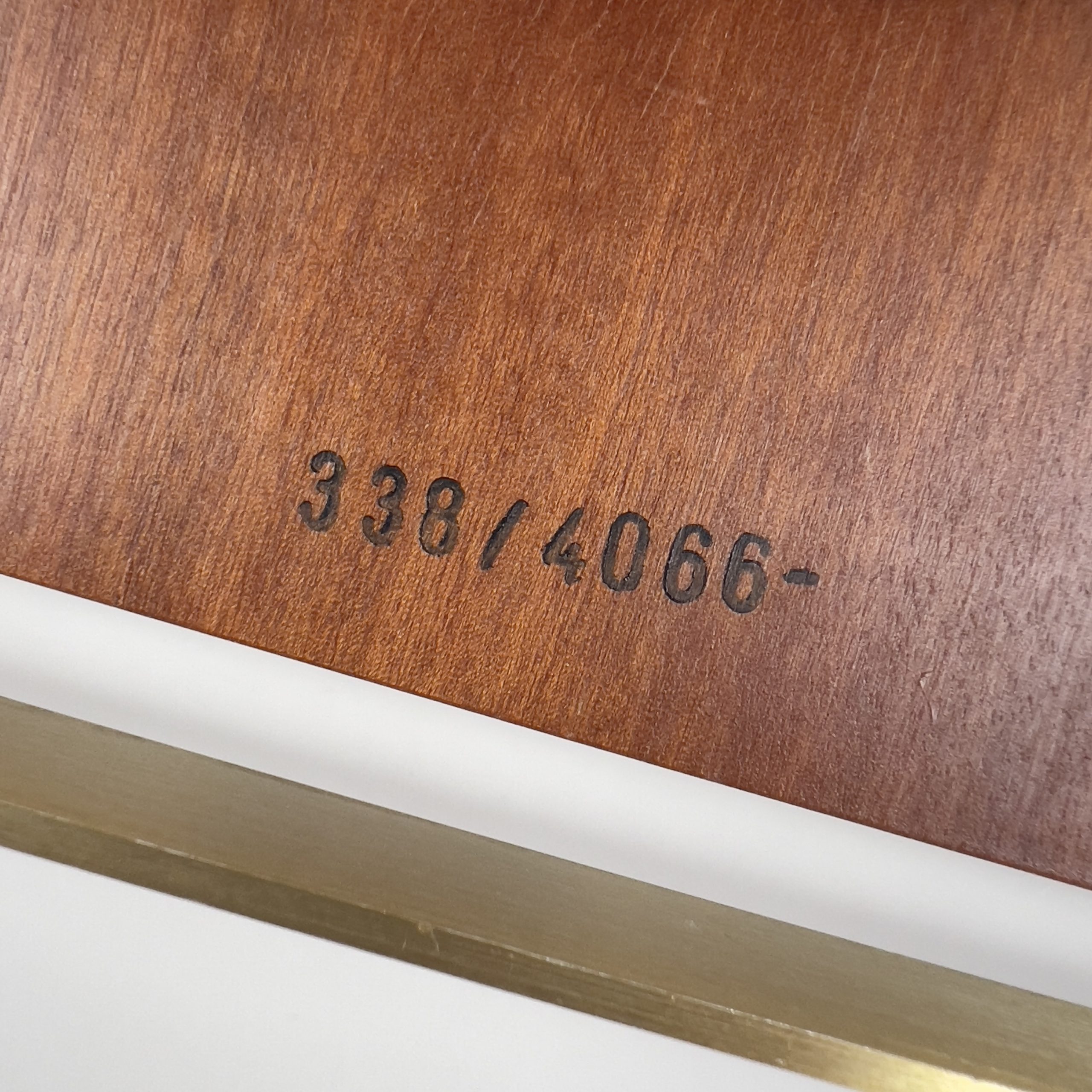
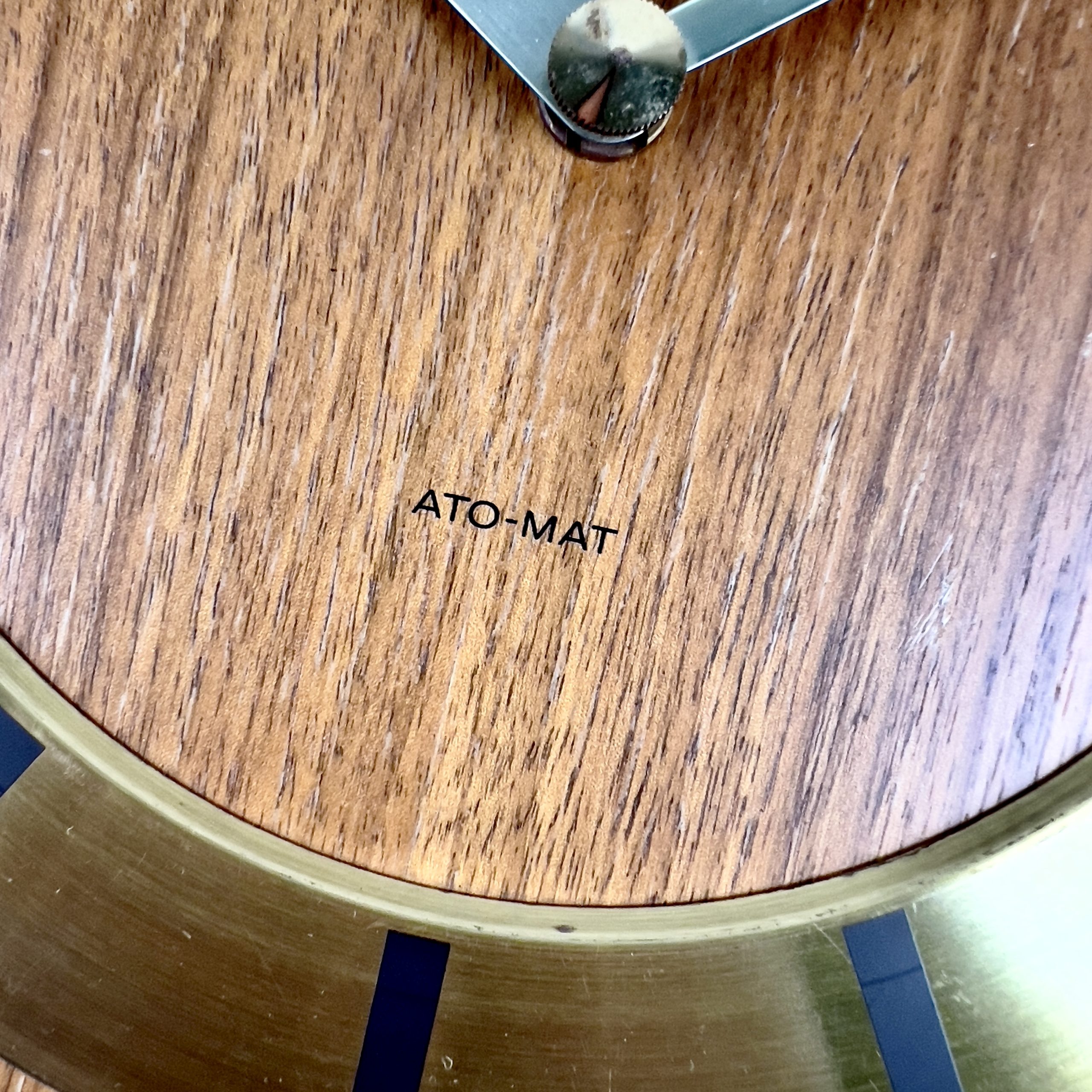
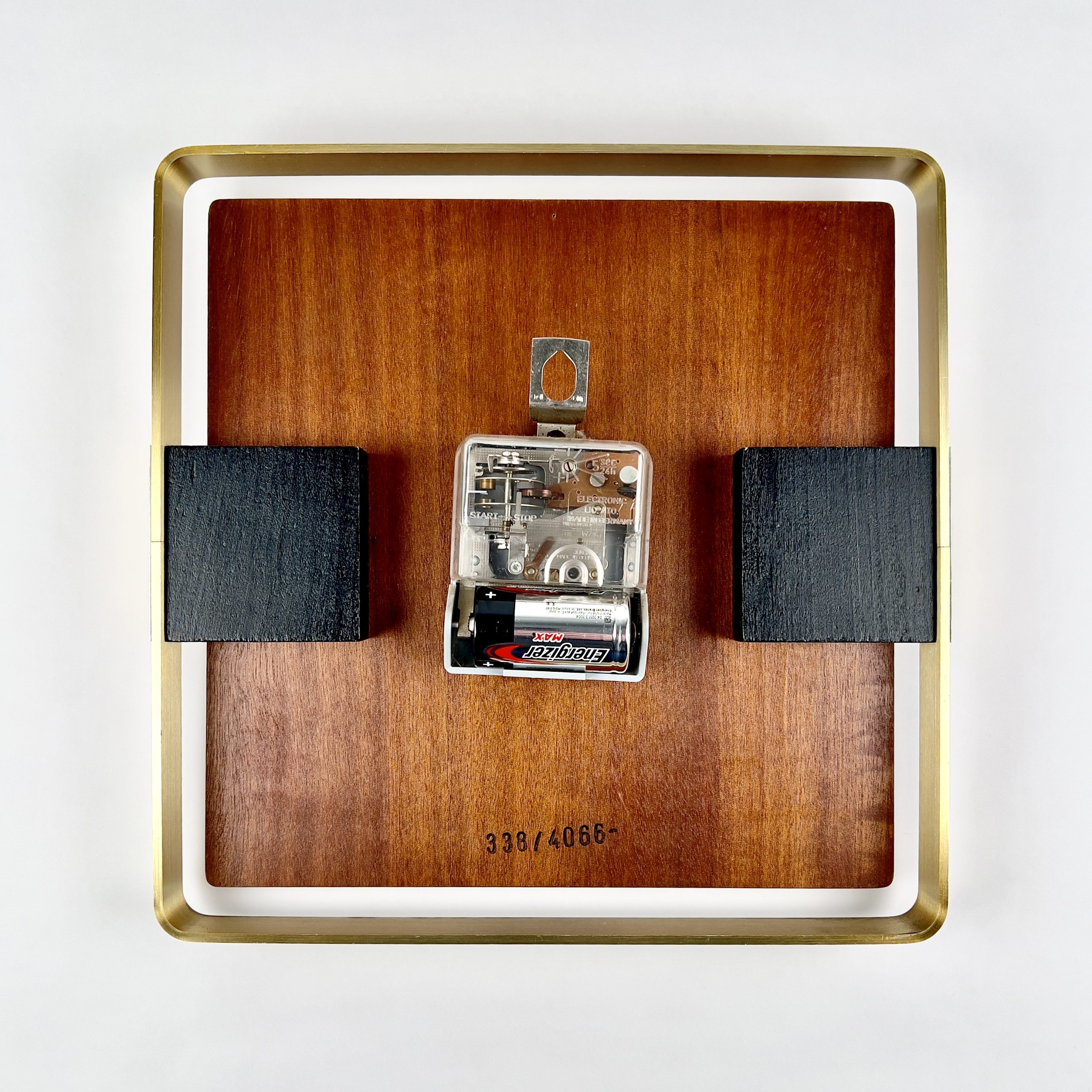
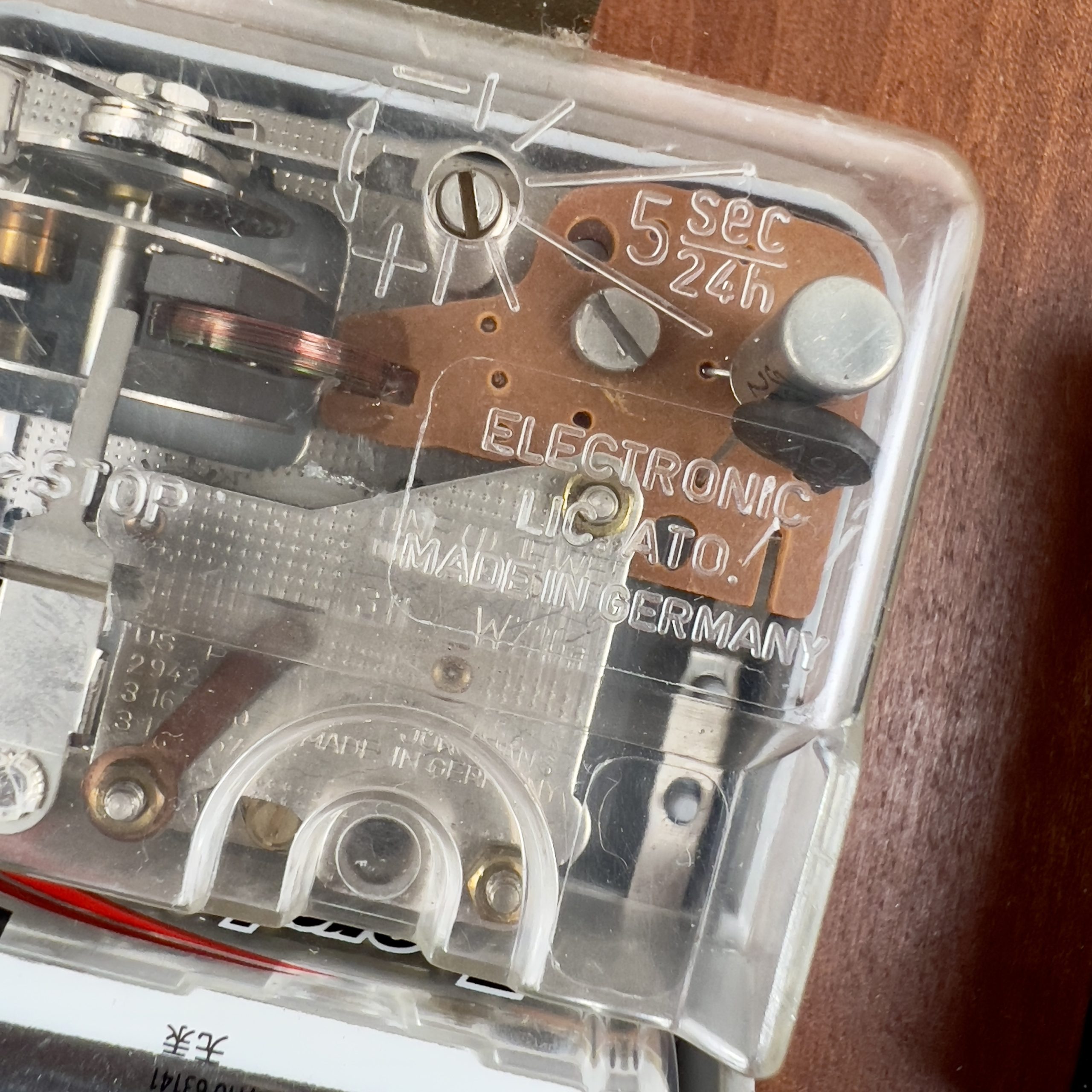
This is a very rare model 338/4066 ATO-MAT electronic version from 1974.
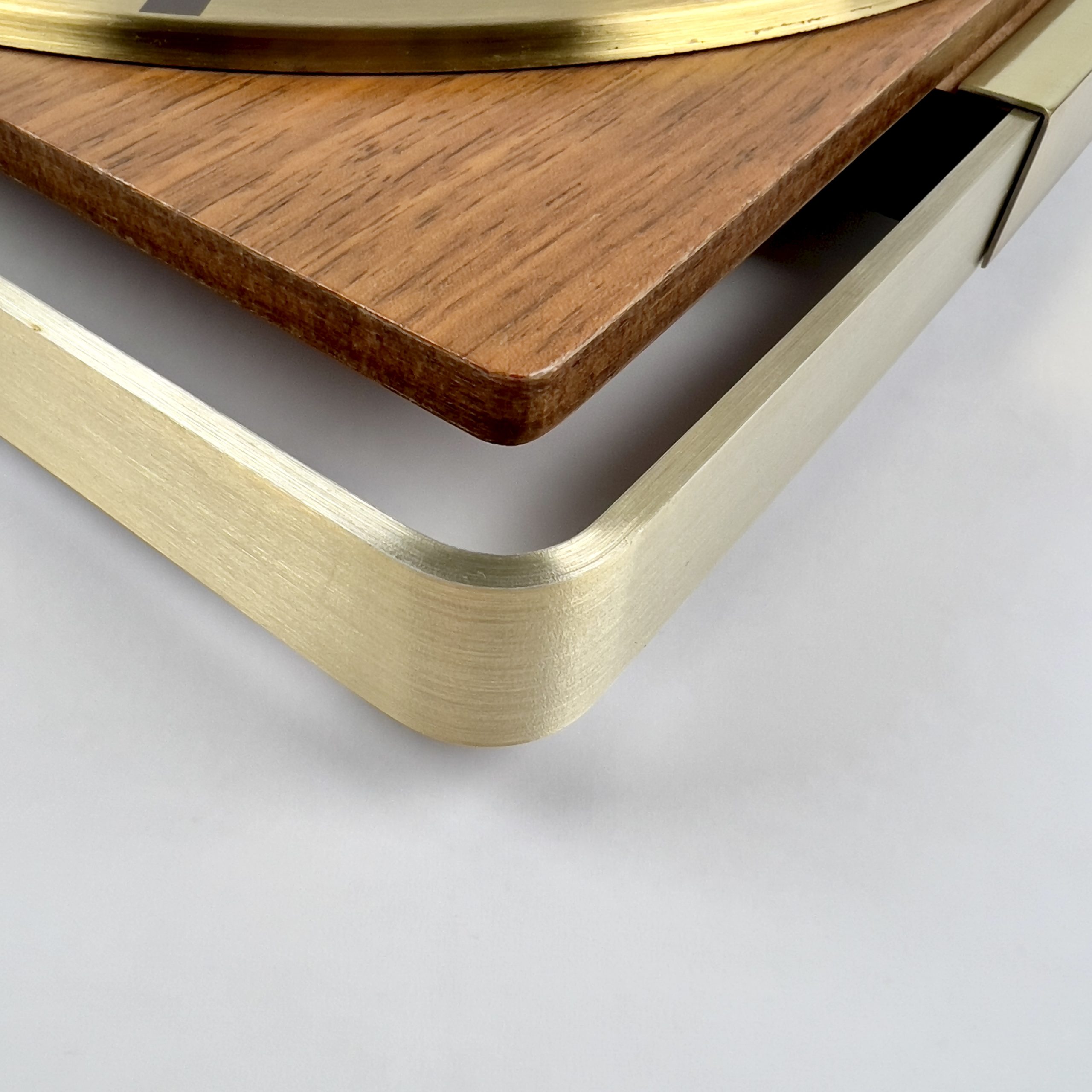
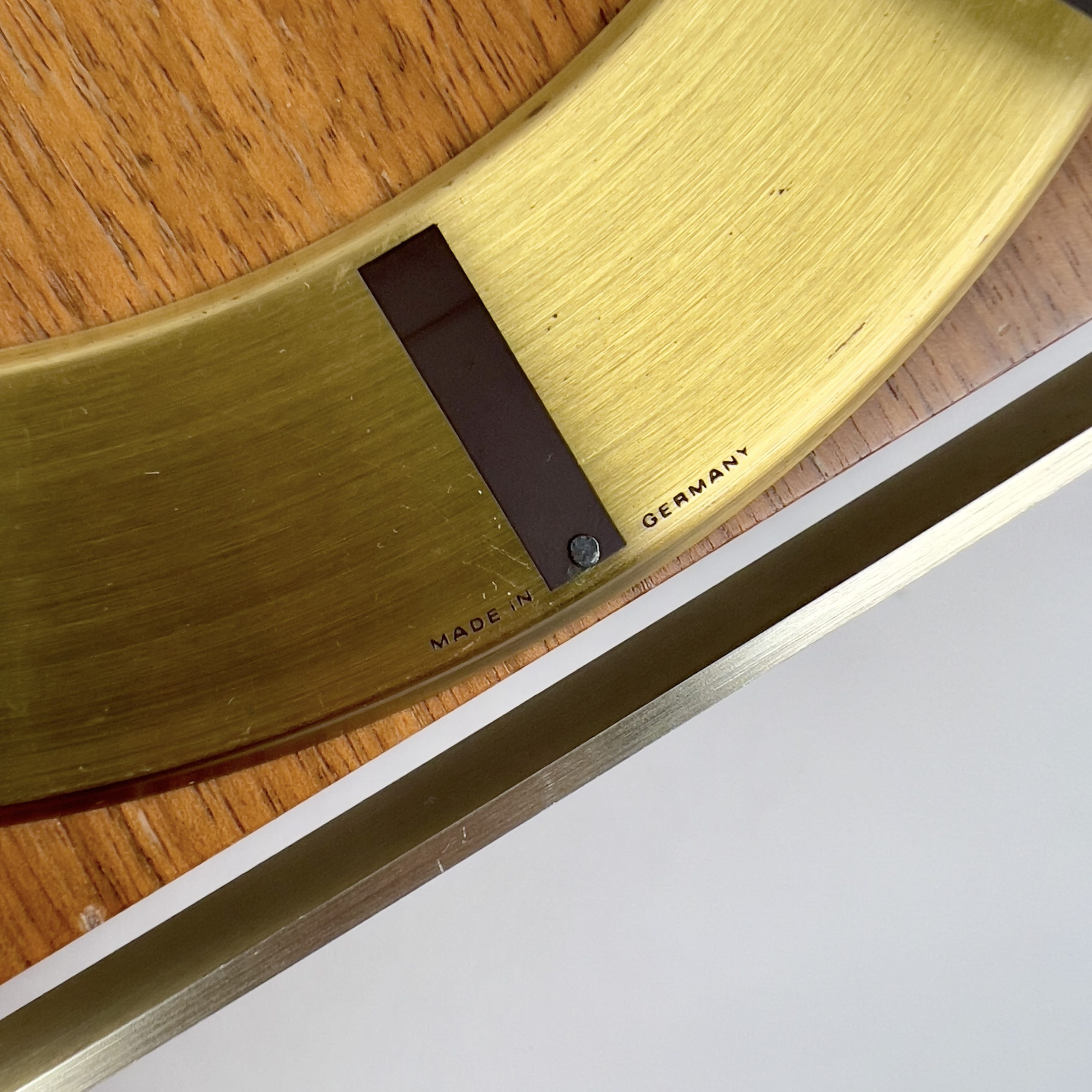
This clock is made from a natural walnut plywood base with a circle of brushed brass numbers applied to it. The whole piece is framed by a gold aluminum border. The materials used automatically create a unique surface and pattern.
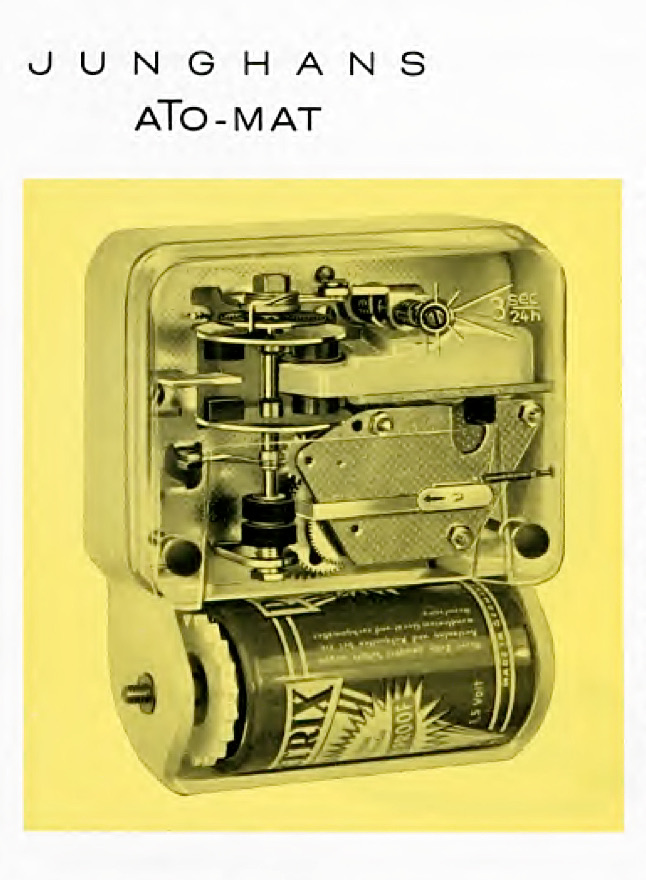
This clock is powered by an electronic transistor movement with an electromagnetic rotary oscillator system. The direct drive gear train, minimal voltage dependence, and NIVAROX temperature compensation spiral ensure exceptional accuracy. The reduced number of individual parts and simple assembly characterize the advanced technology and high precision of this movement.
This clock would perfectly complement a 1970s interior or Scandinavian style, a striking piece with a unique character.
Manufacturer: Junghans
Model: ATO-MAT
Reference: 338/4066
Year: 1974
Materials: Walnut and brass
Dimensions: Length 24 cm Width 24 cm Depth approx. 4 cm
Movement: Junghans, electronic
Box/paper: no